

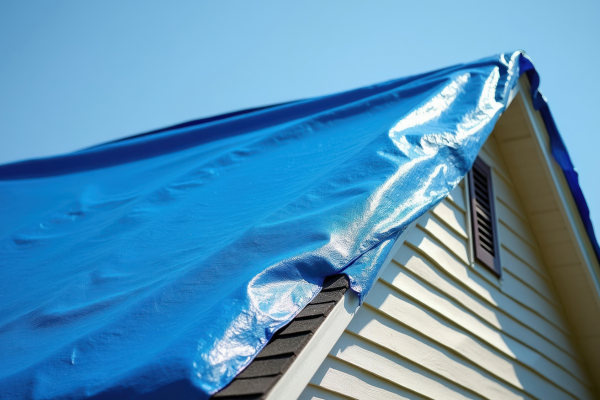
A roof leak can go from frustrating to serious quickly, especially after heavy rain, strong winds or storm damage. When water is actively entering your home, waiting for a full roof repair may not be the safest option. In some cases, an emergency roof tarp service can provide temporary protection until the damage can be inspected and repaired properly.
Storms can develop quickly around Lake Oconee, including nearby communities in Putnam and Greene counties. If your roof has been damaged, acting quickly can help limit additional water intrusion and protect your home from further damage.
At Joe’s Roofing, we understand that roof damage after a storm can feel overwhelming. Temporary roof protection can help reduce stress while giving your home an added layer of defense until permanent repairs can be made.
What Is Emergency Roof Tarp Service?
Emergency roof tarp service involves placing a durable tarp over a damaged or exposed section of the roof. The goal is to help keep rain and debris out until a professional repair can be completed.
This service is commonly needed after storms, fallen branches, high winds, hail or sudden leaks. A tarp can cover missing shingles, exposed decking, punctures or areas where roofing materials have been pulled away.
Because roof tarping requires working on a damaged surface, it should be handled by a professional. A roof may be slick, unstable or unsafe after severe weather. Professional roofers have the equipment and experience to install temporary protection as safely and securely as possible.
Signs Your Roof May Need Temporary Protection
Not every roof issue requires a tarp, but certain problems should be addressed quickly. If water can enter the home or the roof structure is exposed, temporary protection may be needed before permanent repairs begin.
Your roof may need a tarp if you notice:
- Water dripping from the ceiling or coming through light fixtures
- New ceiling stains, wet drywall or damp insulation
- Missing shingles or roofing materials after a storm
- Exposed decking, underlayment or visible gaps on the roof
- A tree limb, branch or debris that has damaged the roof surface
- Hail or wind damage that has left vulnerable areas exposed
- A storm roof leak that continues during or after rainfall
These signs should not be ignored. Even a small opening can allow moisture to spread into the attic, walls, insulation and ceilings.
Active Leaks After Heavy Rain
An active leak is one of the clearest signs that a roof may need emergency attention. If water is entering your home during heavy rain, the first step is to protect the interior as much as possible.
Move furniture and belongings away from the area, place a bucket under the leak if it is safe to do so and avoid touching wet electrical fixtures.
Once the immediate interior area is managed, call a roofing professional. A roof leak tarp may help reduce additional water intrusion until the weather clears and the damage can be inspected.
It is important not to assume that a leak has stopped just because the rain has ended. Water can continue moving through insulation, decking and drywall after the storm passes. That moisture can cause additional damage if the source is not addressed.
Exposed Decking or Missing Roofing Materials
Storm damage can leave parts of the roof exposed. Missing shingles, torn underlayment, damaged flashing or exposed decking can all create a path for water to enter the home.
Even if you do not see water indoors right away, exposed roofing materials should be taken seriously. The next rain can push moisture into weakened areas and lead to leaks, staining or structural damage.
This is where temporary roof protection can be especially helpful. A properly installed tarp can cover the exposed area while the roof is evaluated and repair options are planned.
Why Waiting Can Make Damage Worse
Delaying emergency roof leak repair can lead to more than a larger roofing problem. Water can spread into areas that are difficult to see, including the attic, insulation, wall cavities and ceilings. Over time, this can lead to mold concerns, wood damage, damaged drywall and higher repair costs.
Waiting can also make storm damage harder to document. If your roof was damaged by wind, hail or fallen debris, it is helpful to have the area inspected as soon as possible. Photos, notes and a professional assessment from Joe’s Roofing can help document the damage and determine the next steps for repair.
A tarp does not replace roof repair, but it can help protect the home while those next steps are being handled.
What Happens After the Tarp Is Installed
After a tarp is installed, the roof should still be inspected for the full extent of the damage. Temporary protection gives your home short-term coverage, but the underlying issue still needs to be repaired.
A roofing professional can look at the damaged area, check nearby roofing materials and determine whether the issue is isolated or part of a larger problem. From there, they can recommend the appropriate repair and explain what needs to happen next.
If your home near Lake Oconee has roof damage after a storm, Joe’s Roofing can help with emergency tarp service, roof repair, storm damage inspections and temporary roof protection.
Request emergency roof help or get a free estimate with Joe’s Roofing today.